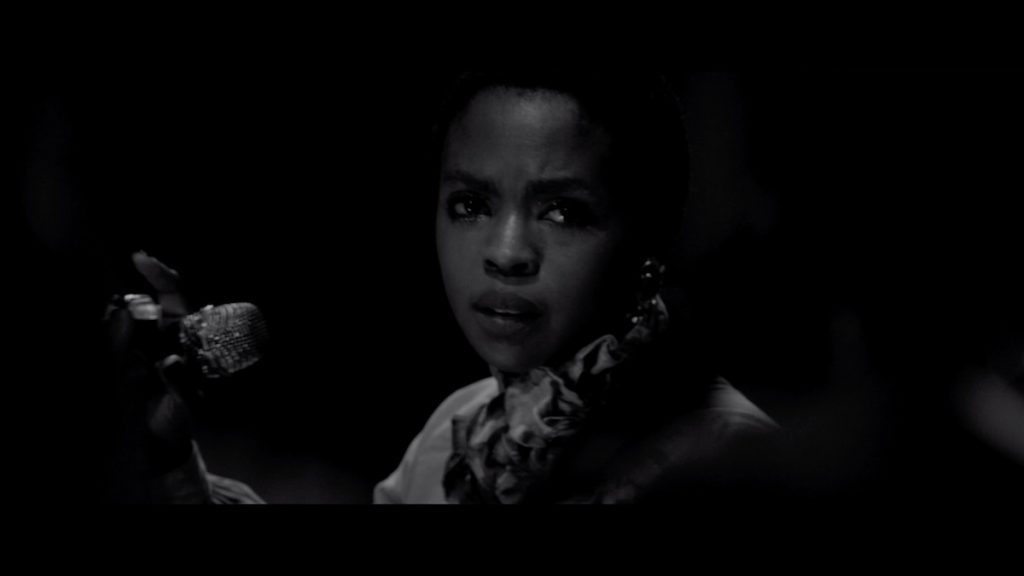

I’ve learned that the most unforgettable exhibitions don’t just show you something new—they change the way you notice what’s already here. That’s the energy behind “Freedom Dreams”, the Barnes Foundation’s spring and summer 2026 exhibition that brings film, video, and installation together as a living, breathing conversation about Black American history and identity. On view from April 12 through August 9, 2026, in the Roberts Gallery, “Freedom Dreams” gathers an intergenerational cohort of artists—Arthur Jafa, David Hartt, Garrett Bradley, Ja’Tovia Gary, and Tourmaline—whose work is rooted in archives, cultural memory, and the kind of truth-telling that refuses easy narratives.
It’s co-curated by James Claiborne, the Fleischner Family Deputy Director for Community Engagement at the Barnes, and Maori Karmael Holmes, Chief Executive and Artistic Officer of BlackStar Projects, and it’s also the first time these works will be presented at a museum in Philadelphia. Sponsored by Comcast NBCUniversal, “Freedom Dreams” arrives right when this city is already thinking hard about legacy, identity, and the stories we carry forward.
The title “Freedom Dreams” is an intentional tribute—an homage to author and historian Robin D. G. Kelley’s writings on radical imagination and visionary ideas of Black thinkers, artists, and activists, and how their dreams of freedom shaped movements for social change. That framing matters because the exhibition isn’t only retrospective. It’s also forward-facing, making space for reflection and contemplation while encouraging audiences to examine the present day through the lens of Black radical imagination.
Equal parts celebration and interrogation, “Freedom Dreams” engages the fluid boundary between past, present, and future and asks viewers to reflect on how Black Americans have shaped identities and created spaces of resistance, joy, and resilience in the face of systemic oppression.
Philadelphia plays a powerful role here, too. The Barnes positions the city—birthplace of the nation—as an ideal location for an exhibition dedicated to exploring “the freedom and potential in liberatory imagination,” especially as the United States approaches its 250th anniversary in July 2026. In that context, “Freedom Dreams” feels less like a single show and more like a cultural checkpoint: a moment to slow down, look closely, and consider what freedom has meant, what it has cost, and what it can become.
“Freedom Dreams”: Five Works That Refuse the Easy Story
The structure of “Freedom Dreams” is both focused and expansive: five major film, video, and installation works that each open a different door into Black experience, representation, and memory. Arthur Jafa’s “Love Is the Message, The Message Is Death” (2016) is a jolt of recognition, tracing African American identity through a vast spectrum of found footage and contemporary imagery.
The work moves across time and media—photographs of Civil Rights–era leaders in the American South, helicopter footage from the Los Angeles uprisings after the Rodney King verdict in the 1990s, and YouTube social dance tutorials—pushing you to examine the historical representation of Black bodies throughout American history. At 8:04 minutes, it’s compact in runtime, but it lands with the force of something much larger.
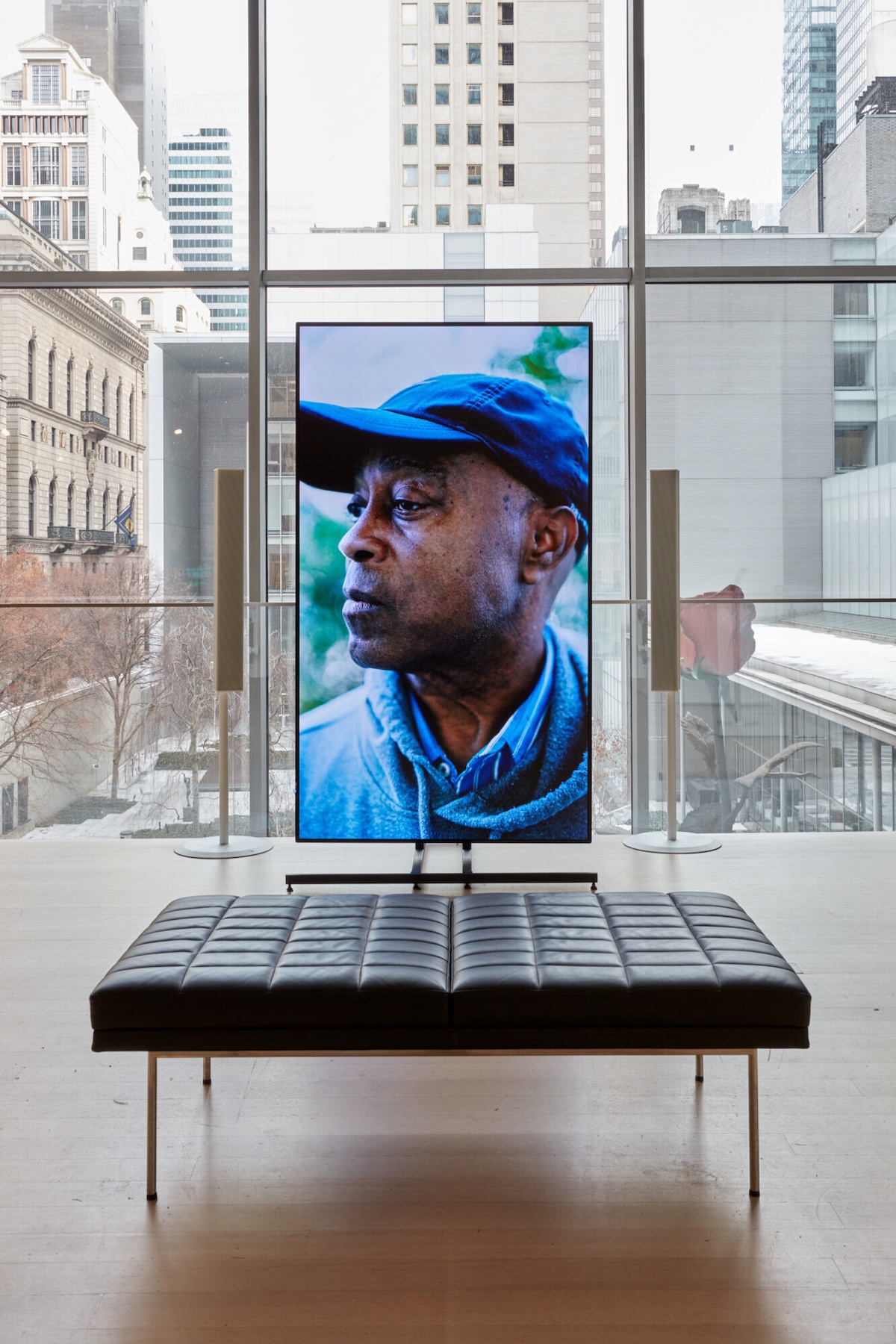
David Hartt’s “On Exactitude in Science (Watts)” (2021) shifts the rhythm into an observational meditation on place and the lingering weight of history. Hartt, who lives and works in Philadelphia and teaches in the Department of Fine Arts at the University of Pennsylvania, reflects on the architectural and social fabric of Watts in South Los Angeles, drawing inspiration from Charles Burnett’s “Killer of Sheep” (1978).
The film shares its title with a short story by Jorge Luis Borges, echoing the necessity and futility of mapping, and it depicts homes and streets devoid of inhabitants. That emptiness isn’t absence—it’s an invitation to contemplate lives within the community and beyond. At 15:47 minutes, Hartt gives viewers enough time to settle into the work’s quiet insistence.
Garrett Bradley’s “America” (2019) might be the exhibition’s most immersive spatial experience, reimagining early 20th-century Black life through a multi-screen film installation. Bradley brings together 12 black-and-white scenes with rare footage from “Lime Kiln Club Field Day” (1913), often considered the earliest surviving film made with an all-Black cast and integrated crew. Moving through 1915 to 1926, the images appear across translucent screens arranged in a broken X, encouraging you to physically move through the space as the images overlap.
The soundscape blends historical and contemporary audio, and the effect is immediate: history stops feeling distant or fixed, and starts feeling lived, felt, and deeply present. The runtime, 29:03 minutes, underscores that this is not a glance—it’s an environment you inhabit.
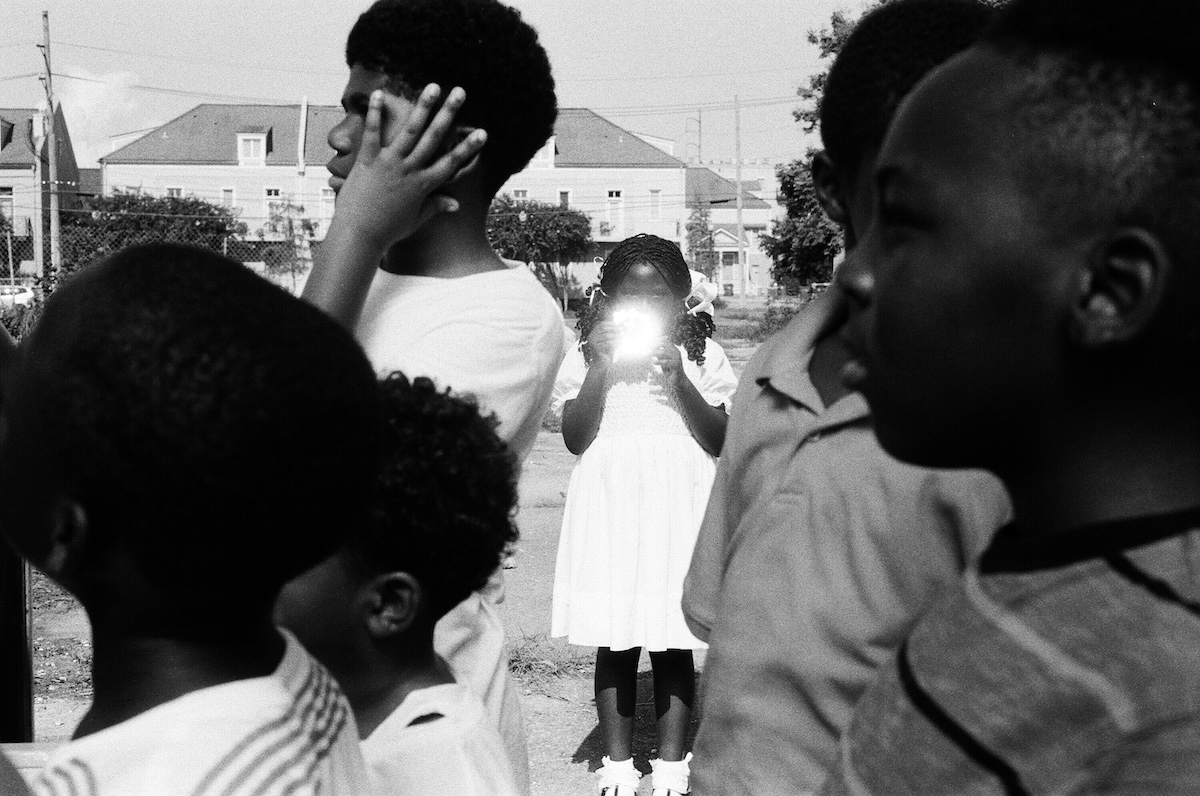
Ja’Tovia Gary’s “Quiet As It’s Kept” (2023) is an experimental documentary developed as a contemporary response to Toni Morrison’s “The Bluest Eye”, and it’s built to unsettle complacency. Gary combines 16mm footage, social media clips, and archival and original interview material to reckon with the legacy and lived experiences of colorism, and to confront internalized and structural anti-Blackness in U.S. culture.
The film’s approach—documentary meets avant-garde—feels especially aligned with the mission of “Freedom Dreams”: disrupting notions of objectivity and neutrality in nonfiction storytelling. At 26:14 minutes, it’s long enough to build tension, and precise enough to keep you leaning in.
“Tourmaline’s Pollinator” (2024), included in the 2024 Whitney Biennial, brings a different kind of hush—one that feels meditative, intimate, and defiantly hopeful. Centered on a reimagining of Marsha P. Johnson’s funeral and grounded in nearly two decades of research, the film weaves footage of Tourmaline herself—“as a generator and receiver of creative forces”—with archival imagery of Johnson’s memorial procession. At 5:08 minutes, Pollinator is brief, but it opens a doorway that stays open long after the screen goes dark.
Freedom Dreams: How to Experience It Like a Philadelphian
“Freedom Dreams” asks us to hold complexity without rushing to resolve it. The exhibition is “equal parts celebration and interrogation,” and that balance is a gift to a city that’s about to spend 2026 talking—loudly—about national origin stories. “Freedom Dreams” doesn’t deny Philadelphia’s role in American democracy; it complicates it, deepens it, and insists we look at the nation’s histories in relationship to the identities and legacies the featured artists bring to light.
Resilience, resistance, and Black joy appear across the works in varying measures, and that range keeps the exhibition from flattening Black life into a single tone or thesis.
There’s also an intellectual generosity built into how the Barnes is packaging the show. “Freedom Dreams” includes an expanded-length brochure with essays by Dr. Kelli Morgan, founding executive director and CEO of the Black Artists Archive; Maya S. Cade, creator and curator of Black Film Archive and scholar-in-residence at the Library of Congress; and filmmaker Darol Olu Kae. That kind of interpretive material matters for film and installation work, where context can sharpen the viewing experience without dictating what you’re “supposed” to feel.
It’s an invitation to stay with the ideas, revisit them, and talk about them later over dinner—exactly how cultural impact really spreads in Philadelphia.
The co-curators’ backgrounds reinforce why this show feels so tuned to the city. James Claiborne brings two decades of program and visual arts curatorial and education experience, including work at the African American Museum in Philadelphia and roles with organizations like Greater Philadelphia Cultural Alliance, Visit Philadelphia, and First Person Arts. Maori Karmael Holmes brings the gravitational pull of BlackStar Projects and her history of building film programs and exhibitions across institutions from the Whitney Museum of American Art to ICA Philadelphia, along with a deep record as a filmmaker and producer.
Together, their collaboration on “Freedom Dreams” reads like a deliberate bridge between Philadelphia’s cultural institutions and the living creator ecosystems that shape what art looks like now.
If you go, give yourself time. This is not an exhibition you rush between errands. It’s one you enter, absorb, and leave with something to carry. And in a year when Philly will be flooded with anniversary programming, “Freedom Dreams” feels like one of the rare experiences that can ground the noise in something real: a chance to examine the present day through the lens of liberatory imagination, and to recognize how much of the future is shaped by the stories we choose to tell—and the ones we finally allow ourselves to see.
About Post Author
Discover more from dosage MAGAZINE
Subscribe to get the latest posts sent to your email.