
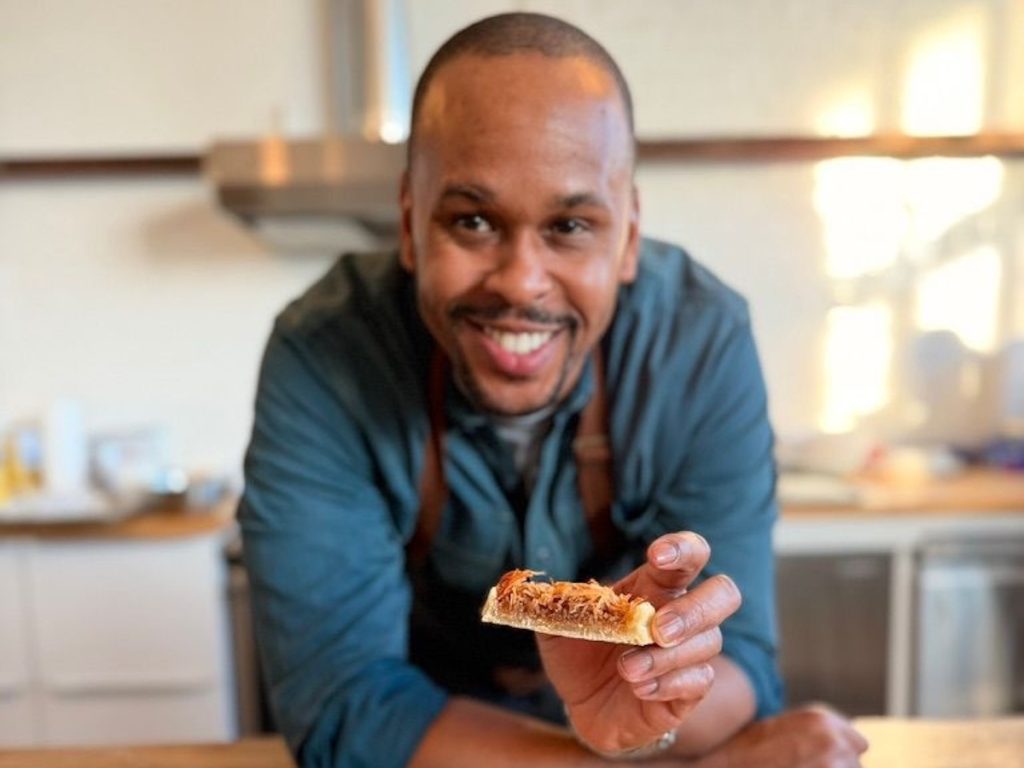
At the stately Central Branch of the Free Library of Philadelphia, more than 75 people braved late-spring storms to gather for an evening filled with food, history, laughter, and cultural memory.
Mothers balanced babies in their arms. Friends leaned across chairs, swapping stories. Smiles traveled easily through the room, including from Christopher Chaplin, Jamaica’s Honorary Consul in Philadelphia, who welcomed attendees with warmth and pride inside the Parkway Central Library’s Skyline Room.
What unfolded was far more than a cookbook conversation. It became an intimate exploration of the African diaspora through cuisine, resilience, and storytelling.
Andre Fowles Brings a Living Cultural Archive to Philadelphia
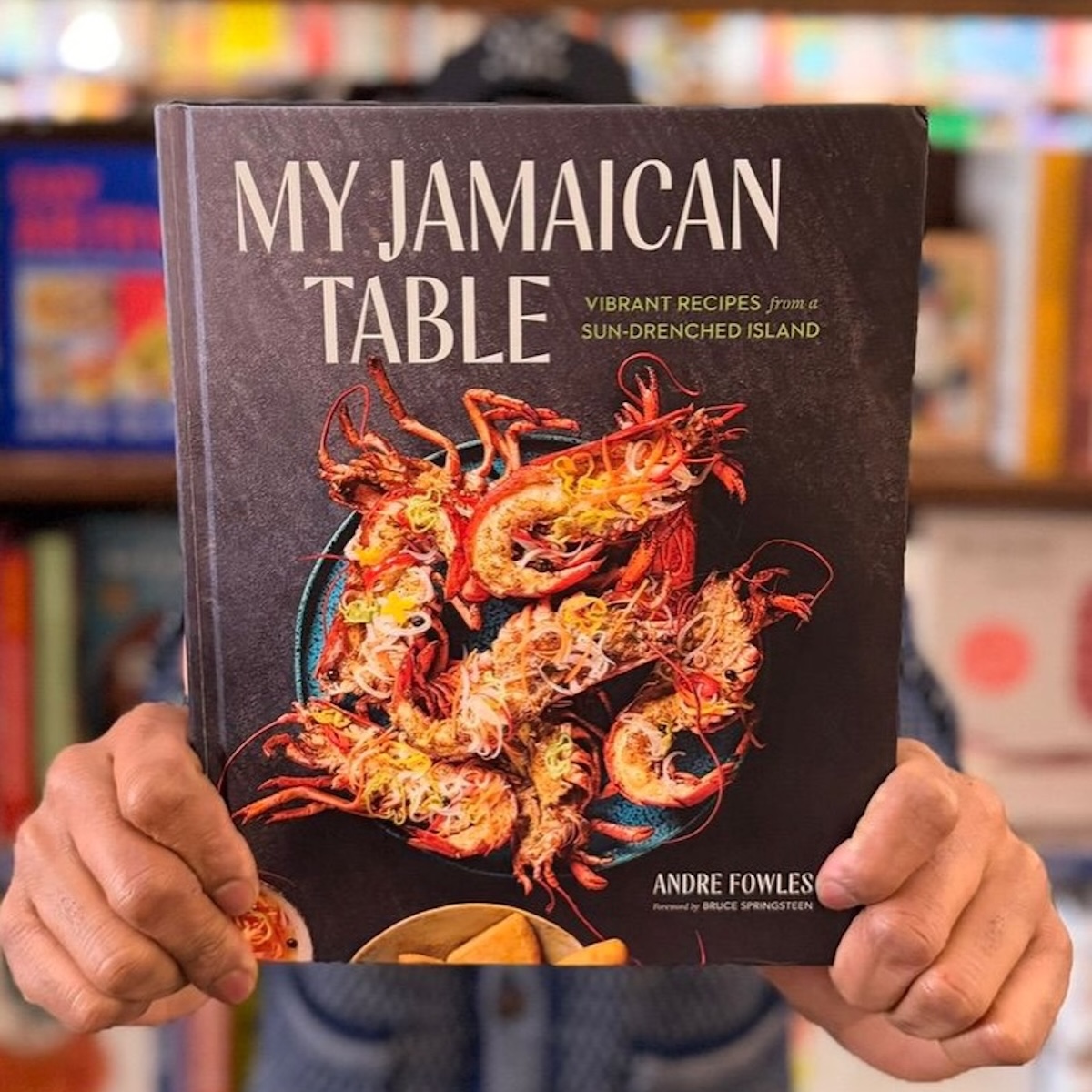
Chef and cookbook author Andre Fowles arrived in Philadelphia not simply to promote a cookbook, but to share a living cultural archive. The evening, titled My Jamaican Table: Vibrant Recipes from a Sun-Drenched Island, was presented through the Free Library’s Culinary Literacy Center as part of Philadelphia’s World Heritage Month celebration. The event also supported the African American Children’s Book Project, with proceeds helping place books into the hands of children.
Fowles, a Jamaican-born chef, three-time Chopped champion, and graduate of both Kingston’s HEART Trust Academy and the Culinary Institute of America, has cooked for celebrities including Bruce Springsteen, who also penned the foreword to My Jamaican Table.
A Culinary Crossroads Born of Resistance
Moderating the discussion, I found myself less interested in measurements and ingredients than in the deeper truths simmering beneath them. Jamaican cuisine, after all, is not simply about flavor. It is a story shaped by colonization, rebellion, migration, adaptation, and survival.
“The food of Jamaica is a story of resilience,” I noted during our conversation. “It was born not just out of survival, but battle.”
Fowles agreed.
Tracing Jamaica’s culinary roots from the Indigenous Taíno people through Spanish colonization, British rule, African enslavement, Indian indentured laborers, and Chinese migration, Fowles painted Jamaica as a culinary crossroads shaped by centuries of resistance and reinvention.
“The Maroons would rather die free than live as slaves,” he said, recalling the communities of escaped Africans who fought British forces in Jamaica’s mountainous interior.
And through it all, food endured.
Ackee from West Africa. Curry from India. Patties influenced by British meat pies. Chinese seasonings woven into modern Jamaican kitchens. The island’s cuisine became a roadmap of the diaspora itself.
What Andre Fowles Learned in His Mother’s Kitchen
But the emotional center of the evening arrived when Fowles spoke not as a celebrity chef or television champion, but as a son.
Raised in Kingston by his mother, Patsy, a single parent raising four children with limited means, Fowles described waking before dawn to watch her walk to market searching for affordable produce before opening her modest cookshop to feed working-class customers.
“I learned hard work from my mother,” he reflected. “Food was her skill set. It was how she provided for us.”
His memories echoed familiar rhythms throughout the African diaspora. Grandmothers who cooked by instinct rather than by measurement. Recipes preserved through observation instead of documentation. Sunday dinners treated as a sacred ceremony regardless of economic hardship.
And yes, oxtails.
Once considered inexpensive cuts born from necessity, dishes like oxtails and rice and peas have now become premium menu items across America. Yet Fowles reminded the audience that these foods originated in communities that transformed scarcity into nourishment and dignity.
Andre Fowles on Authenticity and Inheritance
There was also a broader lesson threaded throughout the evening: authenticity evolves.
Fowles spoke candidly about balancing innovation with cultural respect as Jamaican cuisine increasingly enters fine-dining spaces across New York and beyond. Caribbean food, once boxed into “grab-and-go” stereotypes, is finally receiving recognition for its sophistication and depth.
“The flavors have to remain true to the core,” he explained.
Perhaps the most moving moment came near evening’s end when an audience member asked how younger generations can preserve family recipes that were never written down.
Fowles paused.
“I regret not asking my grandmother enough questions,” he admitted.
His advice was simple: record everything.
Take notes. Capture voice memos. Watch closely. Ask questions while the elders are still here.
Because recipes are more than instructions.
They are inheritance. Geography. Survival.
And on this stormy Philadelphia evening, Jamaican cuisine became something even larger than dinner.
It became testimony.
About Post Author

Discover more from dosage MAGAZINE
Subscribe to get the latest posts sent to your email.
