

The Art of Collaboration Workshop lands at City Arts Salon on Saturday, October 3, from 2 to 5 pm, with the program itself starting at 3. It’s a free, RSVP-only session built for artists, galleries and anyone working inside Philadelphia’s arts community, and it kicks off the venue’s participation in Collective Futures, the citywide festival running through mid-November.
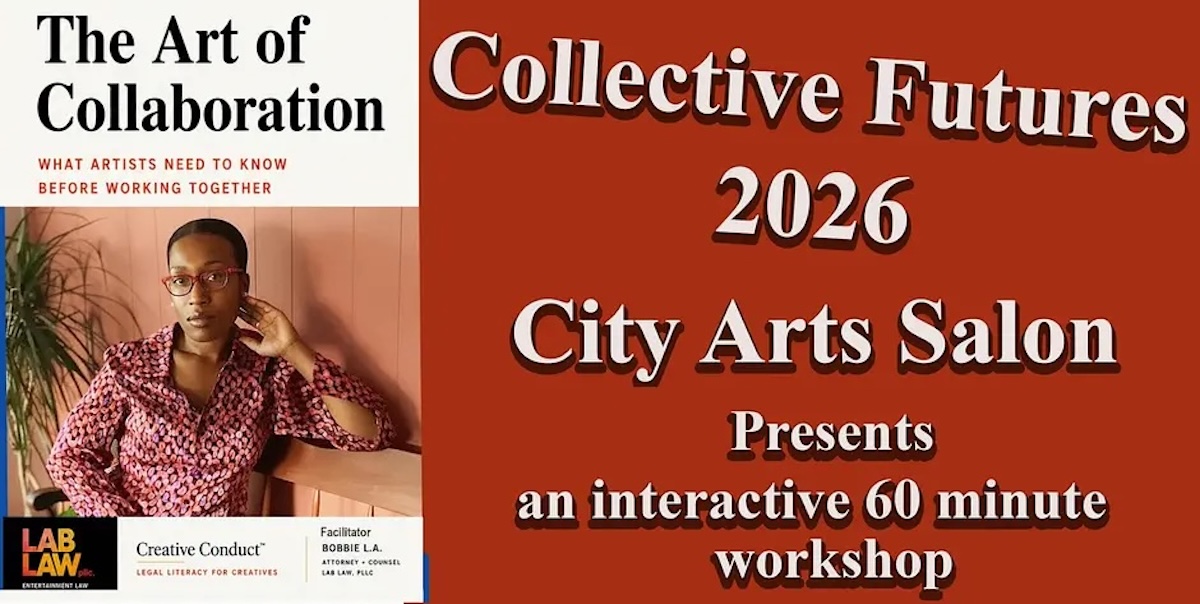
Attorney Bobbie L.A. Brown, founder of LABLAW PLLC, is leading the session under the title “What Artists Need to Know Before Working Together.” The focus is legal literacy — ownership, contracts, licensing — for people who spend a lot more time making work than reading the fine print on how to protect it.
Brown didn’t come to this from a conventional legal track. She ran a nonprofit arts organization and founded a local art collective before opening her New York practice, which now advises artists, entrepreneurs and cultural organizations on the ownership and business side of creative work.
The questions she works through aren’t abstract. Two artists co-creating a mural, or a gallery splitting proceeds with an exhibiting artist — each is a collaboration with real ownership stakes, and the Art of Collaboration Workshop is built around situations like those rather than general contract theory.
City Arts Salon sits at 5838 Germantown Ave., with entrance and parking off West Rittenhouse St. The Art of Collaboration Workshop is free to attend, though the venue is asking for RSVPs given the room’s limited seating.
The Art of Collaboration Workshop Fits Collective Futures’ Larger Push
City Arts Salon’s participation opens with this workshop rather than an exhibition, which says something about how the venue is treating Collective Futures. dM covered the festival’s launch in July — 30-plus independent spaces across the city, running six weeks from Kensington to Old City — and a session on contracts and collaboration fits that scale. Coordinating that many spaces for six weeks means the relationships between them matter just as much as any single show.
That framing matters for a workshop like this one. Artists who co-curate a show or split proceeds on a collaborative piece are entering into an agreement whether or not anyone calls it that — and most of those agreements never get written down until something goes wrong.
Emerging artists tend to have the most to lose in an undocumented collaboration — no legal budget and no standard paperwork, often with no real sense of what a fair split looks like until after a project ships. A free session aimed at that exact gap is doing something most professional development in the arts skips entirely.
The Art of Collaboration Workshop Covers Ground Artists Rarely Get Taught
Brown’s broader practice runs through LABLAW, where she works on intellectual property, licensing and brand management for creative and cultural clients nationwide. The October 3 session narrows that down to the questions that come up before a project even starts: who owns what and who gets credited, plus the harder question of what happens if a collaboration falls apart.
None of that requires a law degree to understand, which is the workshop’s actual pitch. The format is closer to a conversation than a lecture — the kind of session built to leave with a checklist, not a headache.
Brown runs sessions like this one under a program she calls Creative Conduct, aimed at the same gap every time: helping artists understand their rights and responsibilities before they walk into a professional relationship, rather than after a dispute forces the question.
Collective Futures is built on the idea that Philadelphia’s independent art spaces do more together than any one of them could alone. Protecting the work is what lets that actually hold up.
About Post Author
Discover more from dosage MAGAZINE
Subscribe to get the latest posts sent to your email.
