

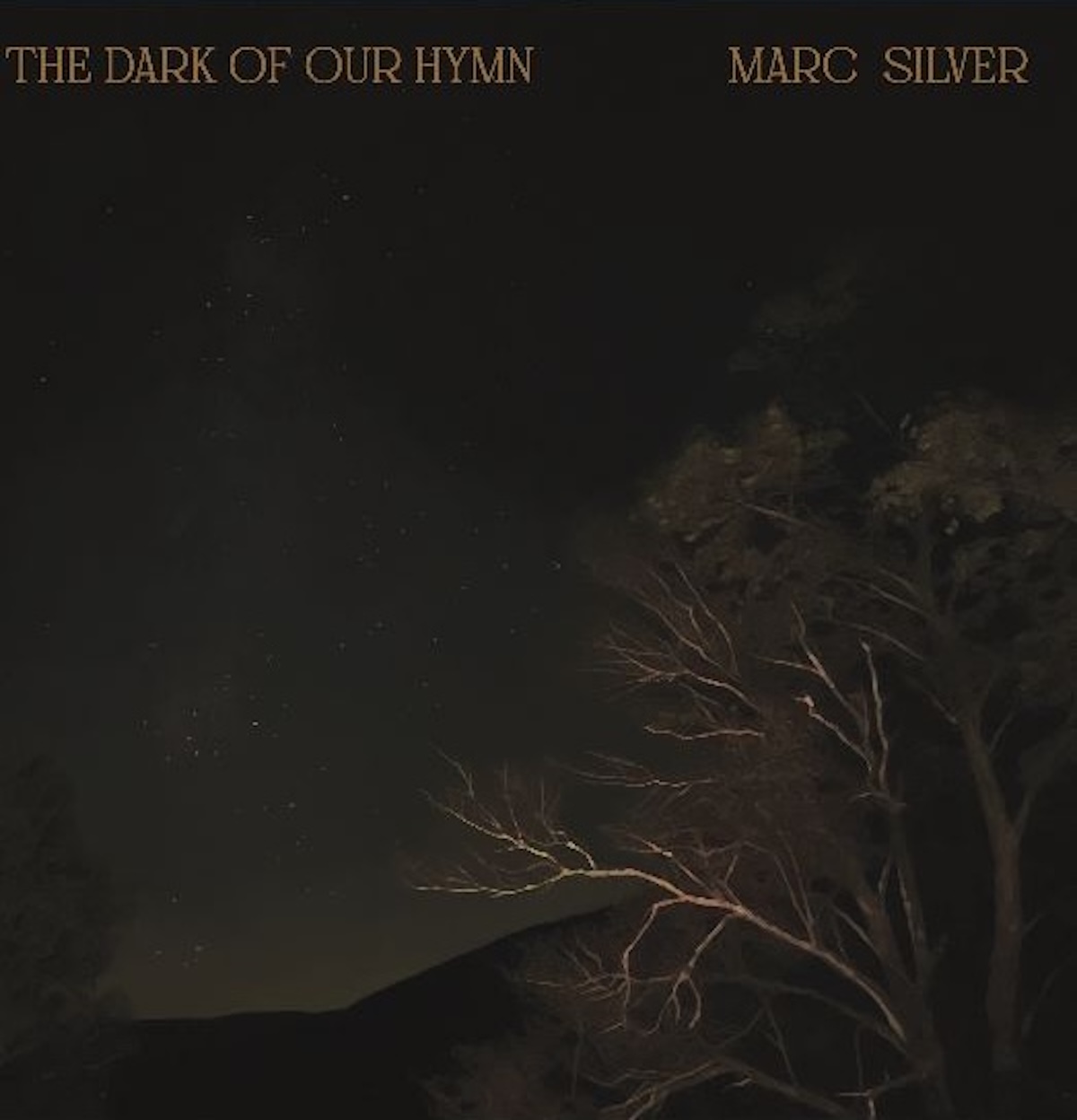
The Dark of Our Hymn, Marc Silver’s eighth studio album, arrives November 6, built around a question the songwriter keeps circling rather than answering outright: what actually remains after someone is gone. Silver celebrates the album’s release November 7 at Fishtown’s The Black Squirrel Club, with first single “Lily White” already out ahead of the full record.
The Dark of Our Hymn Finds Grace Inside Loss
Silver, a University of the Arts jazz program graduate, has spent more than two decades performing solo and with his string band The Stonethrowers, sharing stages with Béla Fleck, Jerry Douglas, and Sierra Hull along the way. That range shows up across The Dark of Our Hymn’s eleven tracks, moving between genres as easily as it moves between the album’s central subjects.
Produced by longtime collaborators Andrew Lipke and Jaron Olevsky and mixed by Tucker Martine, the record blends folk, Americana, bluegrass, blues, and rock around Silver’s literary songwriting. Album opener “Ancestral” sets the tone directly, written during a brief stretch when Silver owned a mandola. “It’s a kind of prayer for a peaceful surrender,” Silver said of the song, which gives the album its title with the line: “There’s beauty in the dark of our hymn.”

“Lily White” Traces Childhood Innocence Into Adulthood
The album’s lead single began with one of Silver’s earliest memories, chasing dragonflies and catching tadpoles with a childhood friend, before crystallizing years later while he watched a young boy lost in make-believe, dressed in a tutu and a feathery crown.
“The song is about the innocence of childhood love,” Silver said, “before growing older leaves us faded, jaded, worn, and tired, but hopefully still tender enough to believe some of the fantastic might come true.”
“Swinging Branches” Carries the Album’s Heaviest Weight
Silver has called “Swinging Branches” the song he’s most proud of, despite its subject. It began as a love song between two men stealing a private moment together, before Silver folded in imagery drawn from a traveling exhibition on the history of lynching that he encountered with his husband.
What starts as tenderness is overtaken by violence, then returns, by the song’s end, to the two men together again beneath the stars. It’s a difficult, deliberately unflinching piece of songwriting, built from Silver’s own memory of being a gay man in the Midwest in the 1980s and ’90s.
“I Knew I’d Make You Mine” Closes on 28 Years of Marriage
Infused with a Laurel Canyon, James Taylor-inspired warmth, the song started as a friend’s story about first attraction before Silver realized it had quietly become his own.
“Growing up never believing that lasting love, marriage, or the stability of a family would be available to someone like me, and then finding all of it with my husband of 28 years, James Rose,” Silver said, describing the song’s final line as a direct nod to that life. It’s the clearest thread connecting an album otherwise built around grief back to something genuinely, hard-won and joyful.
Most albums about death treat mortality as the ending point of every song. Silver keeps writing past it instead, toward memory, toward the people still standing after loss, toward whatever comes next, and that refusal to stop at the obvious ending is what actually holds The Dark of Our Hymn together.
About Post Author

Discover more from dosage MAGAZINE
Subscribe to get the latest posts sent to your email.
